
NVIDIA Reflex is a technology built into the game to sync CPU and GPU work and measure pipeline latency. If a game doesn’t offer Reflex, a driver setting can be a different, less specific alternative; it isn’t right to promise the same behavior in every game.
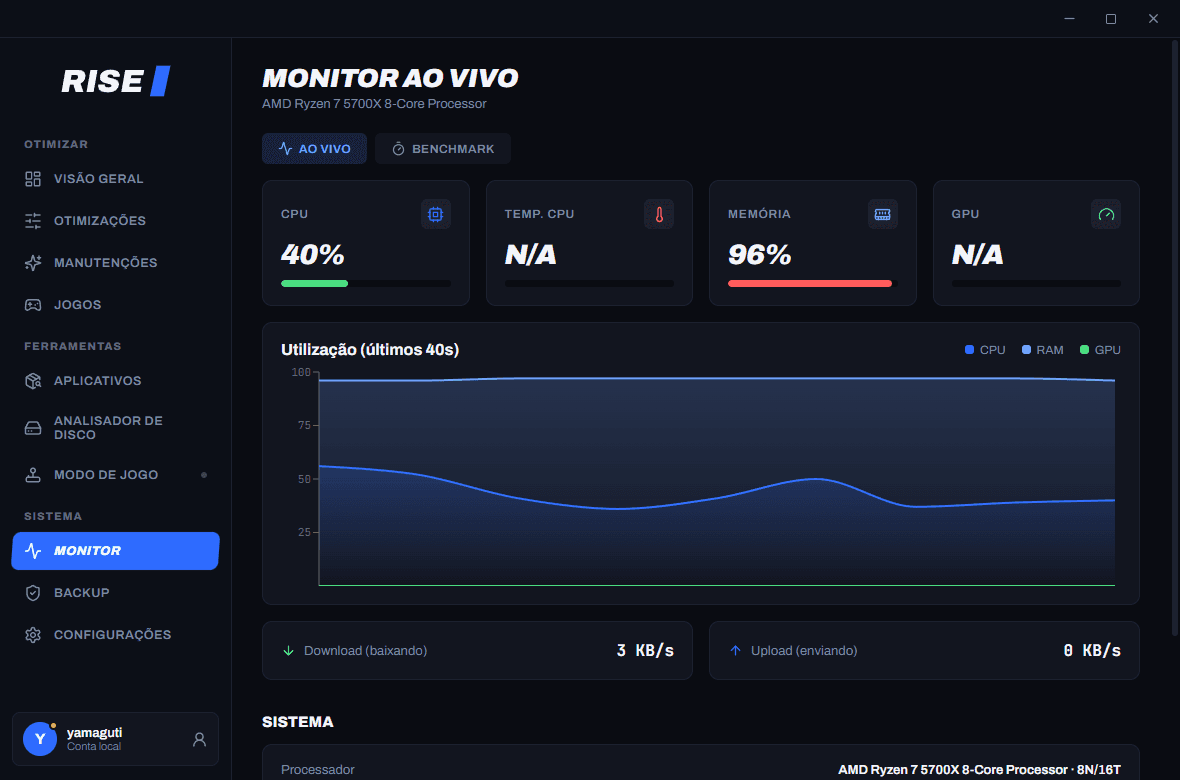
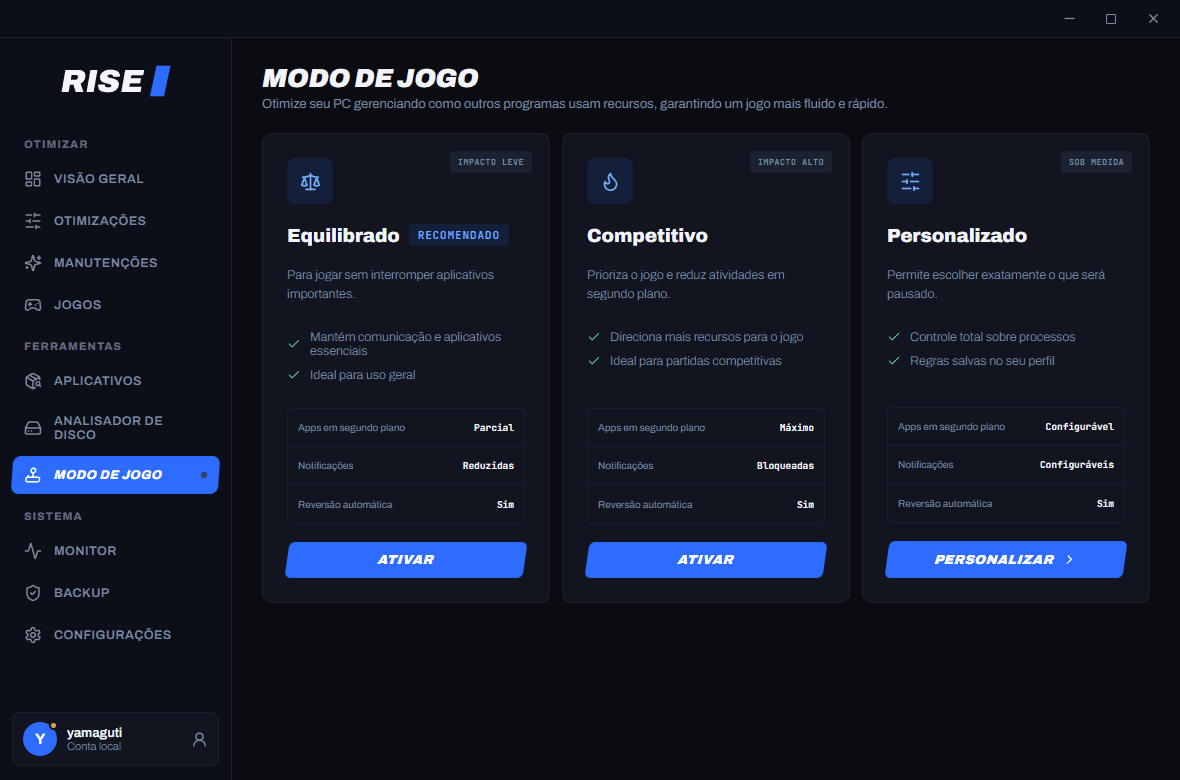
AMD Anti-Lag 2 also depends on the developer integrating it. HYPR-RX bundles features into profiles for selected games, but that doesn’t mean every game gets the same improvement. Rise can detect the vendor, point you to the official control panel and link the preset to the game without injecting code.
Resizable BAR and Smart Access Memory depend on UEFI, the motherboard, the GPU, the driver and the game’s profile. The vendors’ own documentation lists support per game. The result has to be measured per game, with rollback, and without mixing it with a driver update in the same round.
For competitive play, keep FPS and latency apart: PresentMon measures frame pacing; Reflex and the game’s own tools can measure parts of the click-to-pixel path. Network ping isn’t input-to-photon and should never be presented as such.